






Nona’s life changed dramatically when the escalation of the conflict in Nagorno-Karabakh forced her to flee her home in Zandakhach village, Martakert region, in September 2023. As a mother of eight and the sole head of her household, she faced an unimaginable burden.
Together with fellow villagers, the family spent several exhausting days traveling in extremely harsh conditions in the back of a truck, clinging to a single hope- reaching safety in Armenia.
Their first refuge was in Gyumri, where overcrowded living conditions and limited resources made daily life particularly difficult for a single mother responsible for a large family.
Identifying Needs and Providing Coordinated Support
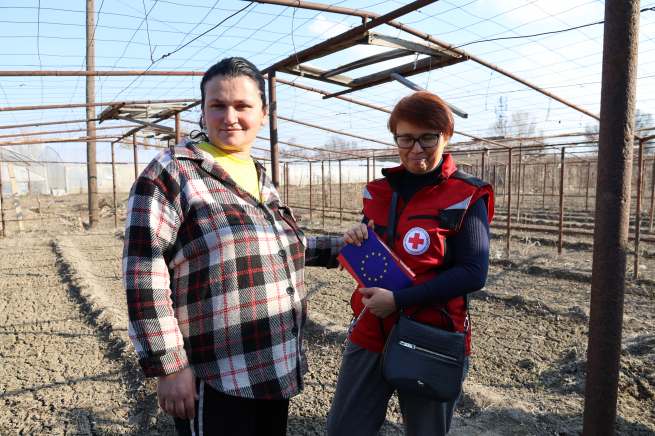
After relocating to the Armavir region, Nona’s family was identified through outreach conducted by the Armenian Red Cross Society (ARCS). Through the RENEW project, implemented with the financial support of European Union Humanitarian Aid and the Austrian Red Cross, ARCS provides integrated protection and livelihood support to displaced families.
A social worker conducted a comprehensive assessment that identified several challenges, including incomplete legal documentation, unstable housing conditions, emotional distress within the family, and limited livelihood opportunities.
During the first home visit, Nona’s 15-year-old daughter appeared withdrawn and struggled to communicate. With Nona’s consent, she was referred to the project’s Mental Health and Psychosocial Support (MHPSS) services. Through regular sessions with a psychologist, she gradually began to re-engage with her surroundings and regained her confidence.
At the same time, the family faced significant legal barriers, including missing or incorrect identity documents and birth certificates. The social worker facilitated referrals to project-supported legal services and coordinated closely with authorities. The family is now nearing completion of the legalisation process and is preparing to apply for Armenian citizenship, an important step that will allow them to access national housing support programs.
Rebuilding Livelihoods
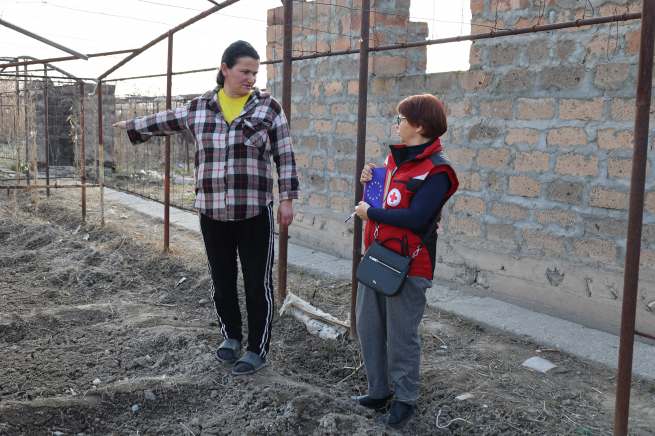
With the support of the social worker, Nona decided to relocate to Griboedov village, where rental costs are more affordable and the environment is more suitable for raising children. The move also provided the family with access to a small plot of land. This marked a turning point.
Through the case management process, the social worker identified a local organisation supporting displaced families with small-scale agricultural assistance and facilitated a referral. Through this connection, Nona received agricultural seeds and began cultivating her small plot of land, creating a modest but meaningful source of income for the household.
“After displacement, I felt powerless, I depended on help for everything,” Nona explains.
“With the guidance of the social worker and the support I received, I was able to move to a village where we could afford rent and access land. Now I am planting seeds and working my own land. This may seem simple, but for me it means dignity, independence, and hope for my children. I am no longer only receiving assistance, I am building our future.”
Gradual Recovery for the whole family
During the initial stages of the transition, ARCS provided food parcels and clothing for all family members, helping stabilise the household while longer-term solutions were being developed.
Gradually, the children began returning to their daily routines. The younger children are preparing to attend kindergarten, while the 16-year-old daughter has enrolled in school and shows renewed motivation. The other children continue their education, and one has already started college.
Today, the family’s situation reflects both improved living conditions and strengthened emotional resilience.
Nona’s experience demonstrates how coordinated humanitarian support combining legal assistance, psychosocial services, basic needs support, housing guidance, and livelihood opportunities can help displaced families move from acute vulnerability toward greater stability and self-reliance.
The RENEW project, implemented with the support of European Union Humanitarian Aid, aims to improve the living conditions and psychosocial well-being of 16,020 women, men, girls, and boys displaced by the Nagorno-Karabakh conflict, which escalated in 2023 and led to a massive influx of over 100,000 individuals seeking refuge in Armenia. Implemented in the regions of Ararat, Armavir, and Kotayk, the project focuses on supporting displaced persons in rebuilding their lives and fostering stability and resilience within their new communities.